

What 50 retailers get wrong about their store pages
Table of contents
Before someone visits a store, they usually want to know three things: is it nearby, is it open, and does it have what they need.
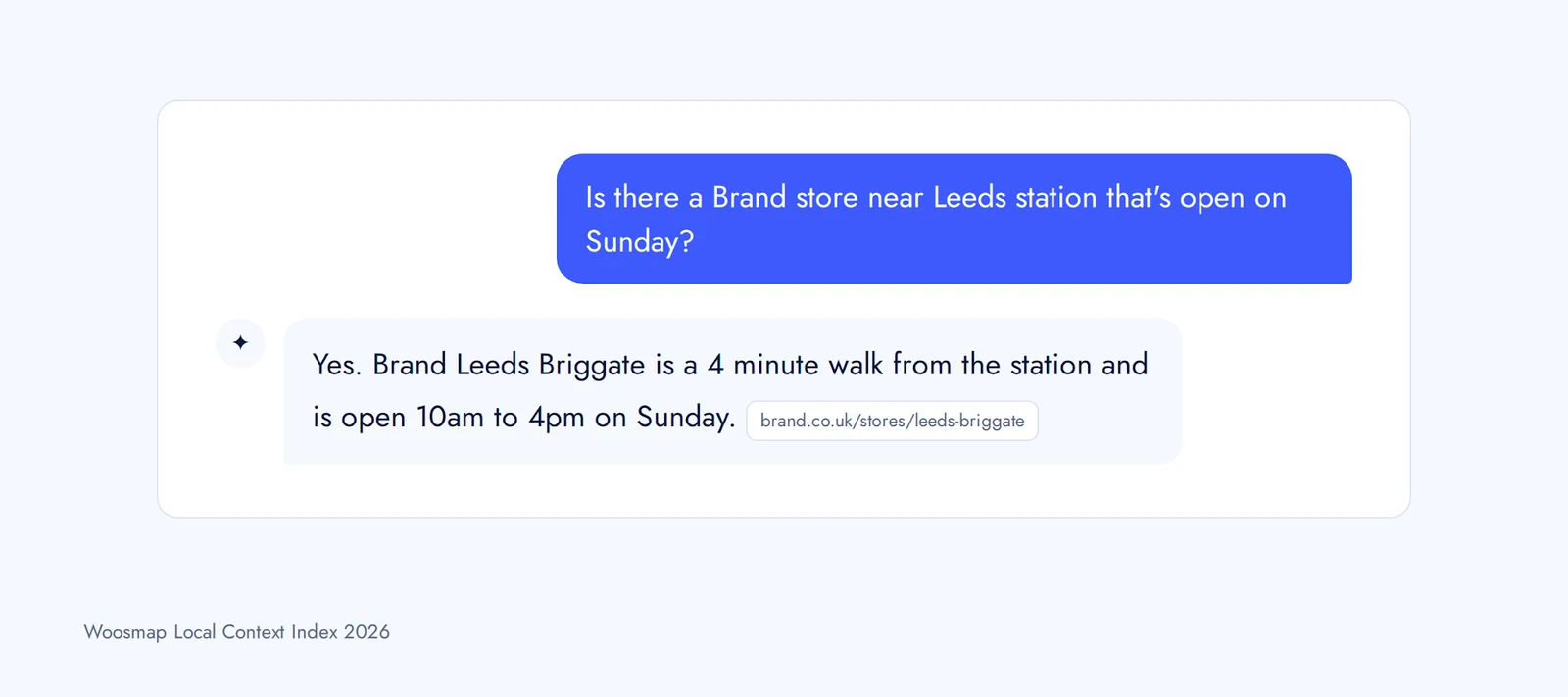
More and more, they don't go to the retailer's website to find out. They ask Google, read an AI Overview, or type the question into ChatGPT or Perplexity. Whatever answer they get is built from what your store pages give those tools.
In September 2026 we looked at the store pages of 50 retail networks in the UK and France. We didn't judge how they look to a visitor. We checked what the server actually sends to a search engine or an AI crawler, and scored each network against 7 basics.
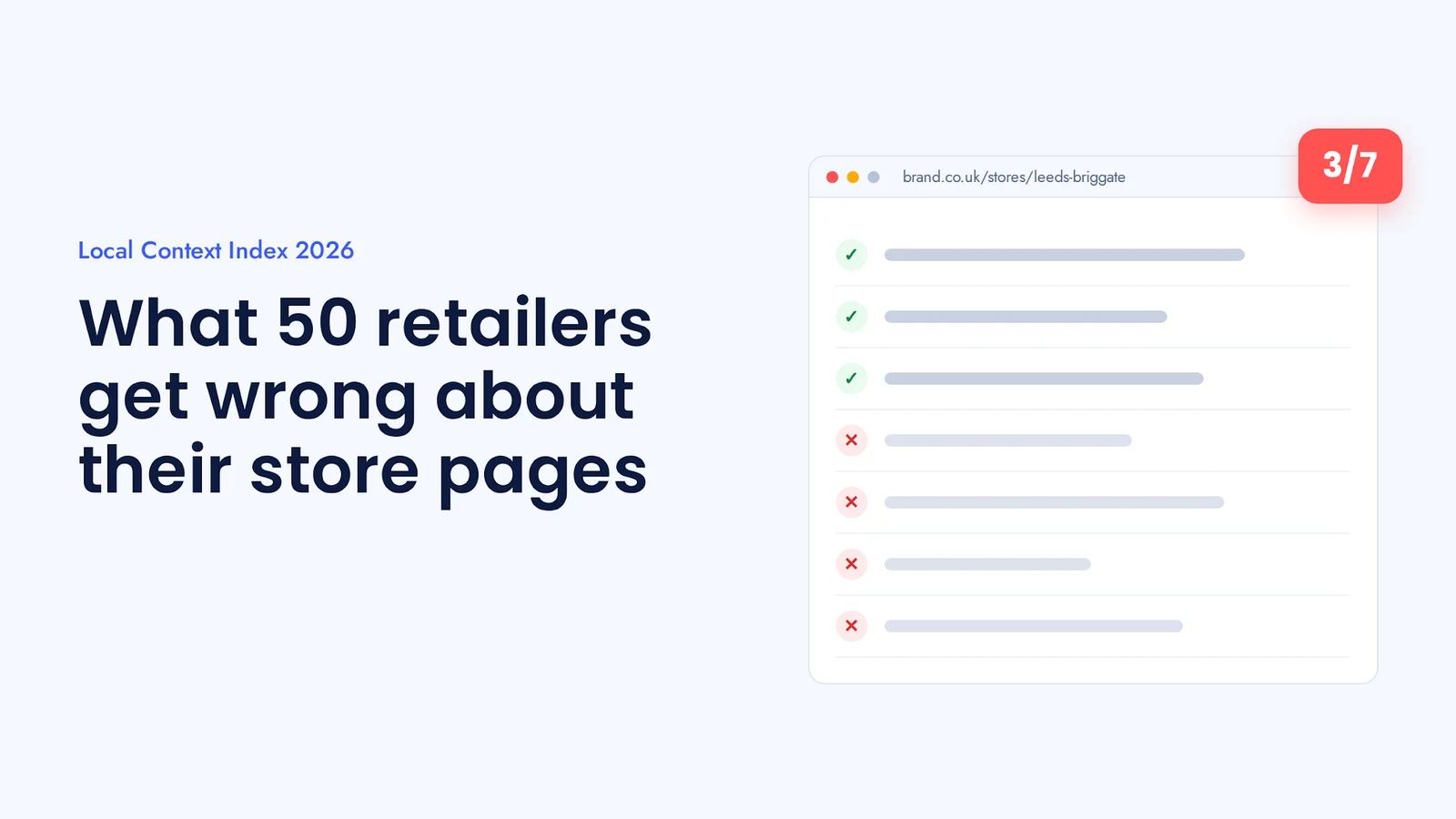
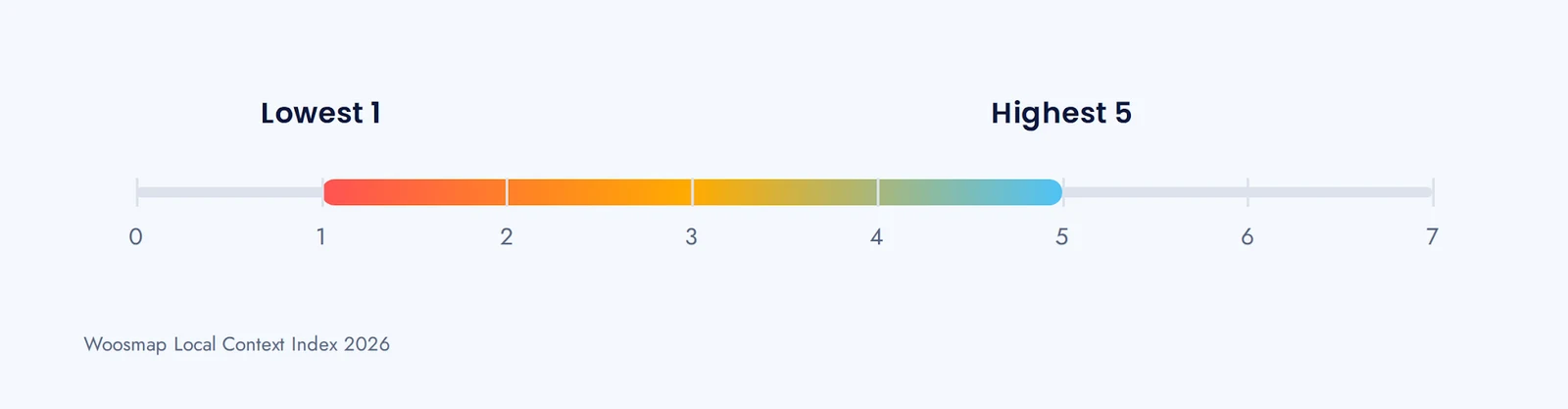
The average score was 3 out of 7.
The store data is right, it just doesn't reach search
Most of the networks we looked at keep good store data. Addresses, hours and services are up to date, and the store locator displays them properly.
The trouble is where that data ends up. Three patterns came up again and again.
One locator, one URL. The map and store list are built in the visitor's browser, so a crawler sees the whole network as one page with nothing on it.
Pages that exist but say very little. A name, an address and a map, but nothing that would answer a search like "store opening hours in Leeds", and nothing an assistant could quote.
Pages with no local context. Nothing about the area around the store: no nearby stores, no points of interest, nothing a search engine or AI assistant can use to place it.
In each case the data is there and it's accurate. It just never turns into something search engines can use.
Three findings worth knowing
1. Only 6% have local content
Most store pages list an address, opening hours and a phone number. That's useful, but every directory listing has the same.
What makes a store page worth ranking is local context: what's near the store, how to get there, where to park and how long the journey takes. That's also the part an AI assistant is most likely to quote.
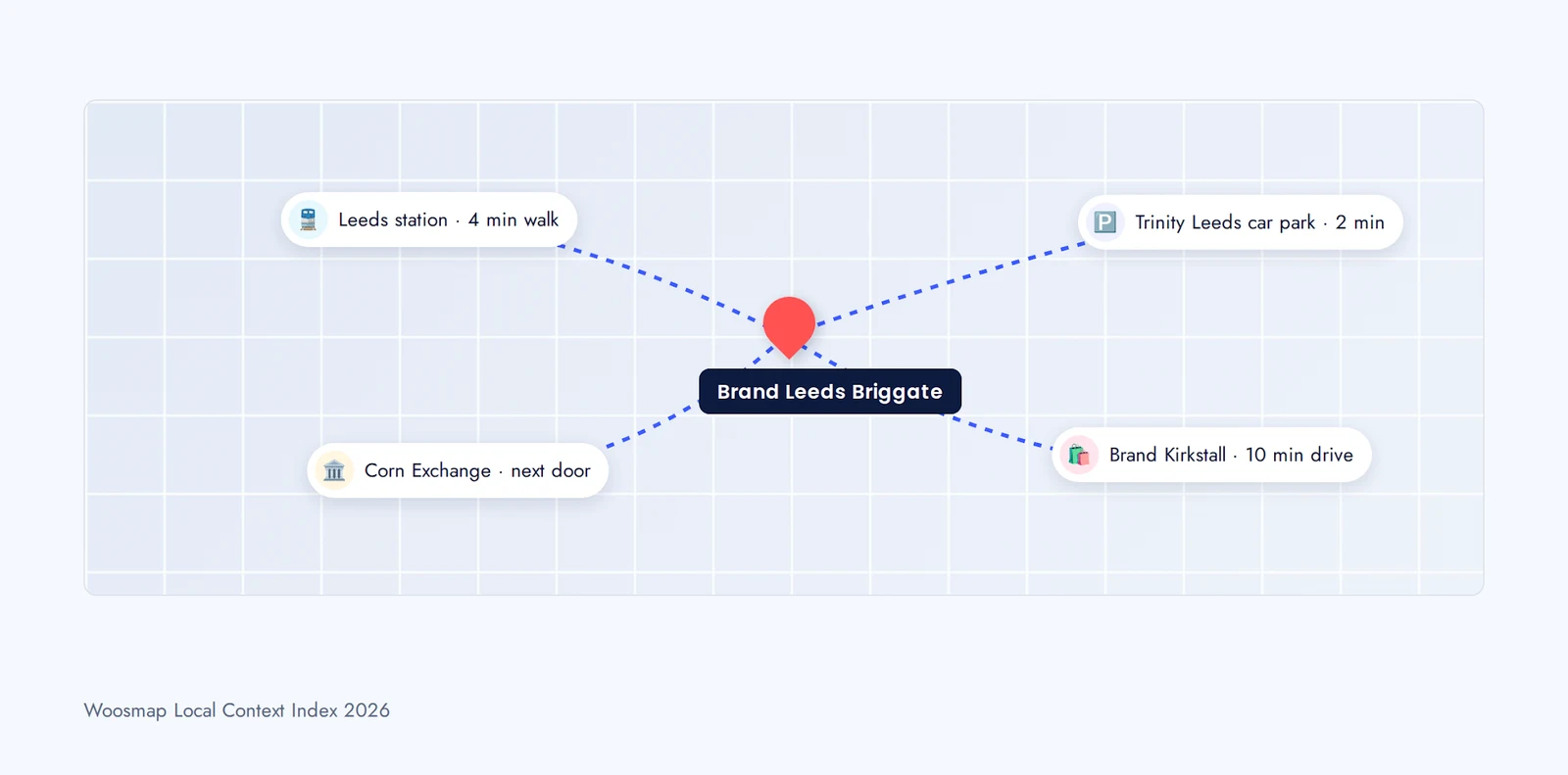
Only 6% of the 50 networks had it, which makes it one of the easiest ways to stand out in local search right now.
2. 6 in 10 store pages are a dead end
When a crawler lands on one of your store pages, it should be able to reach the rest of your network from there, through links to nearby stores, the area page above it and the region above that.
For 6 in 10 networks, that path doesn't exist. The crawler finds one page and misses every other location.
3. Many AI crawlers don't run JavaScript
Google renders JavaScript, eventually. The crawlers behind ChatGPT, Claude or Perplexity read the HTML the server sends, and move on.
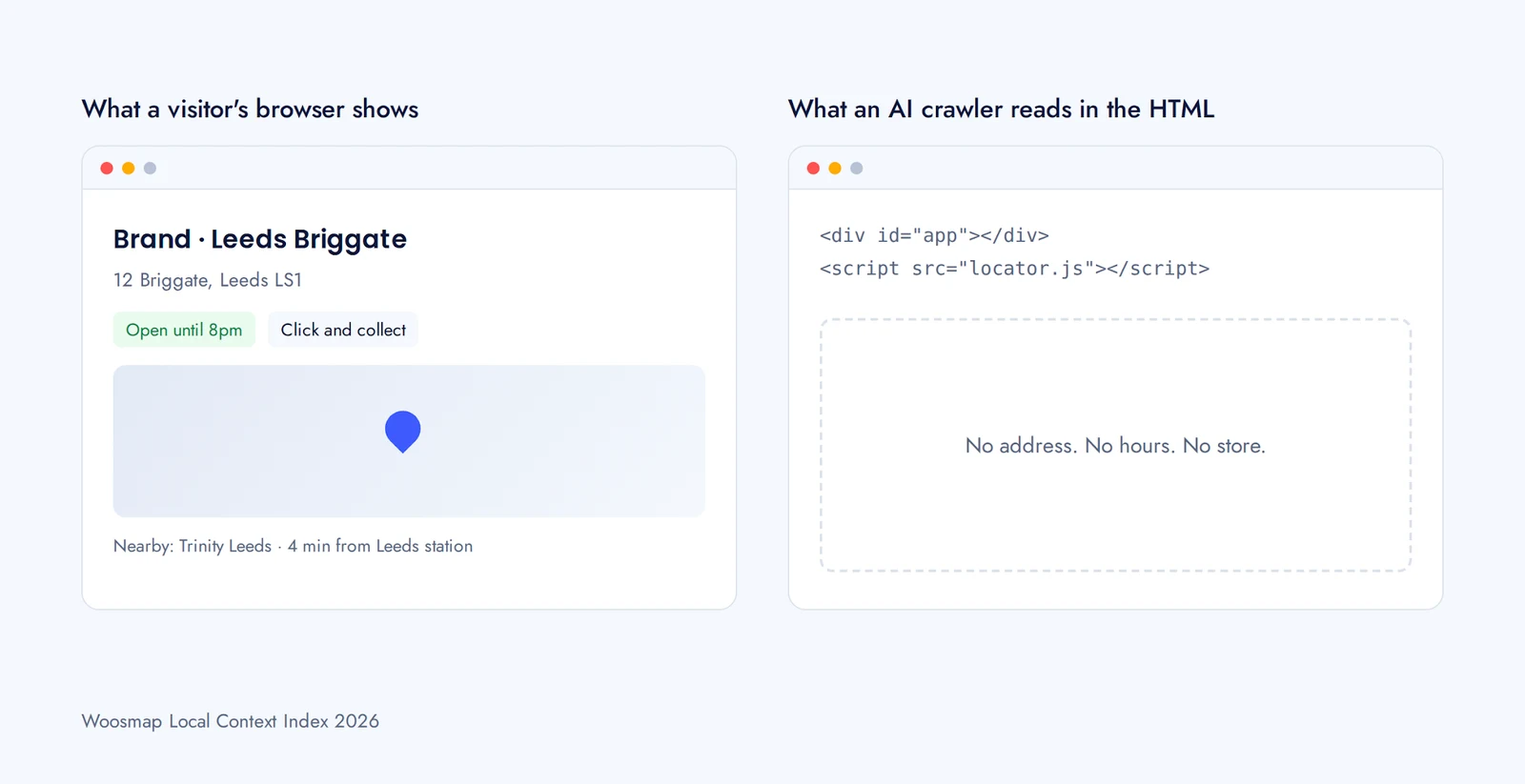
If your store details only appear once the page loads in a browser, there's no guarantee those assistants will ever see them. And people are asking them more often: in a US survey, the share of consumers asking an AI tool for local business recommendations went from 6% to 45% in a year. Our European data shows how few store pages are ready for that.
The platform doesn't decide the score
Seven networks in the panel use the same well known local marketing platform, and their scores range from 5 out of 7 down to 1.
So the tool isn't what makes the difference. What matters is whether the store data actually makes it into the page, in a form search engines can read.
What a good store page includes
Closing the gap doesn't mean rebuilding your site. Store pages that search engines and AI assistants can use tend to have these in common:
- A title that names the place: the brand, the store and the city, so the page answers a city search as well as a brand search.
- The key facts in the HTML: address, phone number, regular and holiday hours, and services, in the page itself rather than loaded later by a script.
- A short paragraph on access and surroundings: what's next to the store, nearby places that complement your business, the closest transport, parking and travel times.
- Structured data: a block of code that tells search engines and AI tools the store's type, hours, coordinates and address.
- Directions: a map with a text alternative and a link that opens directions.
- The nearest stores: so neither visitors nor crawlers hit a dead end.
- A breadcrumb from country to store: with a real page at each level.
How Woosmap Store Pages fixes it
Woosmap Store Pages turns the store list you already maintain into one page per store, plus one per region and county, on your own domain and in your own design.
There's nothing to re-enter and no copy to write. Woosmap generates each page's content from your store list: local context, structured data, a map and links to the nearest stores. Your own platform renders it, so it reaches crawlers in the HTML your server sends. When hours change or a store moves, the page updates with it.
Every page is measured from day one, so you can see which stores bring in visits, which pages need work, and which cities are looking for a store you don't have yet.
If you already use the Woosmap store locator, your store data is already in place. Store Pages works alongside it: the locator helps people who have already found you, and store pages help them find you in the first place.
Learn about Woosmap Store Pages
How do your store pages compare?
The full findings, including the seven points we measured and how we measured them, are in the Woosmap Local Context Index 2026.
Download the Local Context Index 2026
Or go straight to your own result. Send us five of your store page URLs and we'll tell you how they score. No sales deck, just your score. Get your score